|
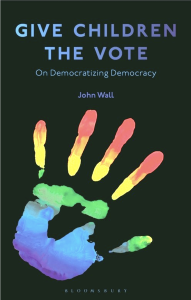
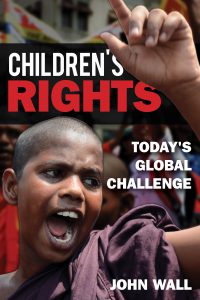
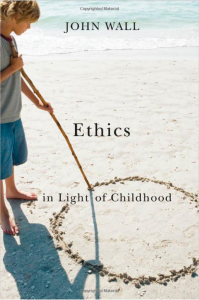
I am Professor of Philosophy, Religion, and Childhood Studies, as well as Director of the Childism Institute, at Rutgers University Camden. I work as a theoretical ethicist and have written or edited nine books and dozens of articles in political philosophy, post-structuralism, the philosophy of religion, and children’s rights. I am best known for developing the concept of childism, or the normative empowerment of children, as well as advocating for ageless suffrage. Latest WorkMy latest book is Give Children the Vote: On Democratizing Democracy (Bloomsbury 2022). It argues that denying children the vote in democratic societies is both unjust and counterproductive. Using political philosophy, history, and childhood studies, it responds to the major objections made to children’s suffrage and shows why ageless enfranchisement is in reality both important for democracy and beneficial for both children and societies. It also makes the childist case that, just as with other enfranchised groups over history, children’s suffrage would lead to stronger democratic norms and structures. I am co-editor with Sarada Balagopalan and Karen Wells of The Bloomsbury Handbook of Theories in Childhood Studies (Bloomsbury 2023), a 26-chapter volume by leading global experts that advances cutting-edge theoretical work in the field of childhood studies. Chapters cover a wide range of theorizations in childhood studies from feminism, decolonialism, and queer theory to critical race studies, posthumanism, childism and much else. I am also editor of Exploring Children’s Suffrage: Interdisciplinary Perspectives on Ageless Voting (Palgrave Macmillan 2023), a multidisciplinary study of ageless enfranchisement by leading political scientists, philosophers, sociologists, historians, economists, medical researchers, legal scholars, and others. And I am co-editor with Tanu Biswas of a forthcoming five-article special issue of the journal Children & Society (2023) on the theme of “Childism.” My current book project is titled Transsensus and explores the connection between politics and aesthetics. I am working on a novel titled The Art of Being. LeadershipSince 2019, I have been the founding director of the Childism Institute, a global collaboration of hundreds of scholars dedicated to challenging children’s historical marginalization by transforming scholarly, social, and political structures and norms. In this capacity, I lead a team that organizes tri-annual colloquia as well as workshops, conferences, speakers, collaborative publications, opinion pieces, special issues of journals, edited volumes, and books, as well as developing collaborations and consultations with local, national, and international organizations run by both adults and children. Since 2020, I have been co-founding director with activist Robin Chen of the Children’s Voting Colloquium, an international consortium of over a hundred scholars and activists working to eliminate all voting age restrictions at the local, national, and global levels. This organization has been instrumental in connecting researchers and activists across many countries and backgrounds to build the groundwork for stronger democratic futures. Previous WorkMy previous books include Children’s Rights: Today’s Global Challenge (Rowman & Littlefield 2016), an argument that children’s rights are the major human rights challenge of the twenty-first century; Ethics in Light of Childhood (Georgetown 2010), where I develop the concept of “childism” or empowering children’s experiences to transform social norms; and Moral Creativity (Oxford 2005), a post-structuralist theory building on the ideas of Paul Ricoeur of moral life as poetic, that is, as an activity of the creation of ever new meaning out of tension of human lived experiences of difference. I am in addition co-editor of Children and Armed Conflict (Palgrave 2011); Marriage, Health, and the Professions (Eerdmans 2002); and Paul Ricoeur and Contemporary Moral Thought (Routledge 2002; paperback 2016). ServiceIn 2006, I helped to create North America’s first doctoral program in Childhood Studies, and from 2010 to 2012 chaired the Childhood Studies and Religion Group at the American Academy of Religion. For 12 years I chaired Rutgers Camden’s Department of Philosophy and Religion, and in Fall 2016 I served as Acting Associate Dean of the Rutgers University Camden Faculty of Arts and Sciences Graduate School and Research. I have chaired or read for numerous dissertations and serve on several scholarly journal editorial boards. I am regularly interviewed in the media on issues of children’s rights and political philosophy, including for BBC Radio 4, Swedish Public Radio, the Washington Post, Philadelphia Inquirer, and numerous podcasts and blogs worldwide. Some of this media can be found on the websites of the Childism Institute and the Children’s Voting Colloquium. BackgroundI received a Ph.D. in Religious Ethics from the University of Chicago in 1999 and have taught at Rutgers University Camden since 2000, including courses in Children’s Rights, Evil, Biomedical Ethics, Religion and Culture, Introduction to the Bible, and Philosophical and Religious Perspectives on Childhood. I was awarded a 2006 Board of Trustees Research Fellowship for Scholarly Excellence and a 2005 Provost’s Award for Teaching Excellence. I live in Philadelphia in the US with my family and grew up in the United Kingdom. |
|